How safe is Preikestolen?
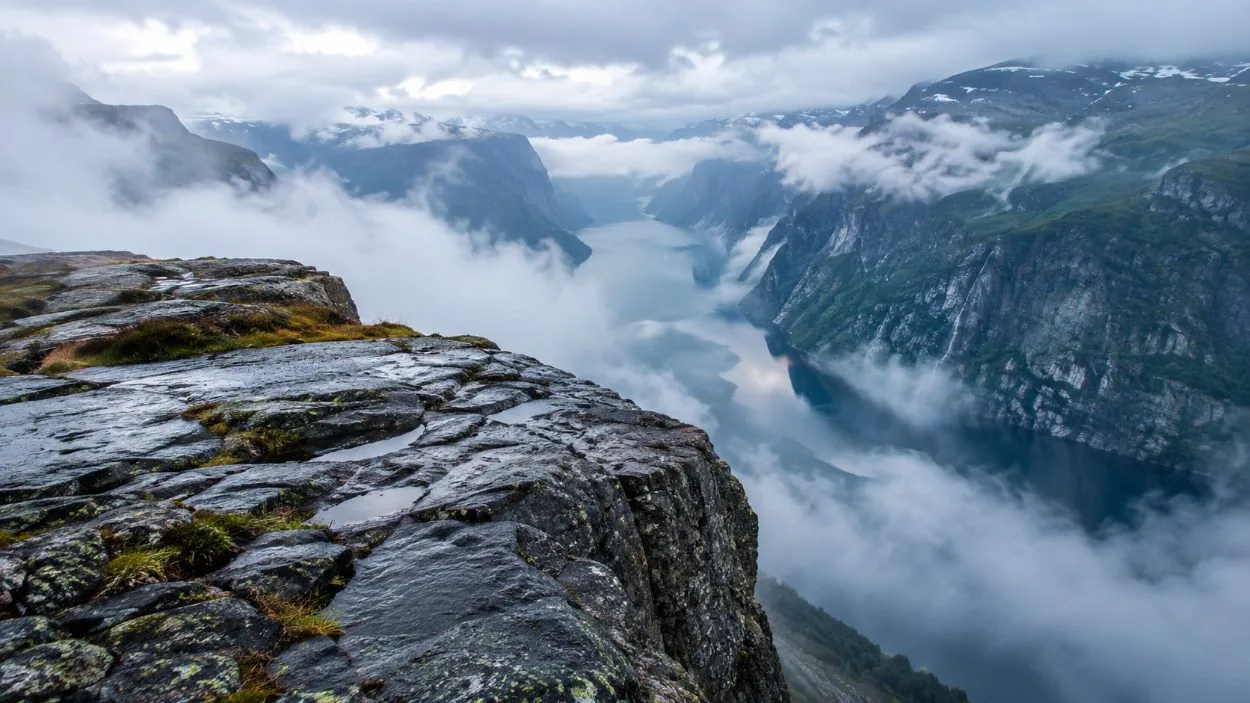
There is no fence, and that is on purpose
The plateau is roughly 25 by 25 metres of almost flat granite and it simply ends. No railing, no fence, no chain, no painted line. The land managers have chosen to keep the site as it is rather than build anything, and whatever you think of that, it is a decision rather than neglect. A fall from the plateau is around 250 metres and is not survivable. That sentence is the whole of the safety briefing for the top: the no-fence page.
What has actually happened
There is no complete public count of deaths at Preikestolen, partly because Norwegian media does not report suspected suicides, so anyone quoting you a total is guessing. What is documented is this. The first reported tourist fatality is dated October 2013. On 3 June 2024, at around half past ten in the morning, a Norwegian man hiking alone fell roughly 150 to 200 metres from the summit area; his body was recovered that afternoon by the Rogaland alpine rescue service, and the local mayor, Irene Heng Lauvsnes, called it a very sad incident. I am not going to write those two events up as anything other than what they are. More detail, and the wider question people are really asking, is on the has-anyone-fallen page.
Rescues, which are the ordinary story
Hikers have to be helped off this trail every year. In early July 2019, during a record visitor year, call-outs had already passed the whole of the previous year's total. I cannot give you an annual figure because no reliable one is published, and I would rather say that than repeat a number I cannot stand behind. What I can tell you is the pattern: the calls are about people who have run out of light, run out of legs, or turned an ankle, far more than about the edge.
Where the actual risk sits
On the way down. There are no Preikestolen-specific injury statistics published, so this is reasoning rather than data, and I will label it as such. The descent puts tired legs onto uneven stone for two hours, stepping down rather than up, with a boulder field to negotiate. That is how ankles turn and how knees stop cooperating, and it happens two hours from the car park rather than twenty minutes from it. Pace the descent and you have removed most of your risk: the injuries page.
The crack in the plateau
There is a gap about half a metre wide and several metres deep running across the top, and it has been monitored with bolts since around 1930. In May 2017 the Geological Survey of Norway measured it 2 to 3 millimetres wider, the first detected movement in 22 years, and said explicitly that it was not panicking and assumed the rock had not moved lately. The current geological assessment is that there is no foreseeable safety risk. It is not expected to fall in anybody's lifetime. That is the calm version and it is also the accurate one: the crack page.
What the official advice actually says
Tell someone your plan. Check the forecast. Above-ankle waterproof boots. Warm and windproof layers. A phone. A headlamp. Crampons if there is ice. Turn back without embarrassment if it is going badly. And call 113 in an emergency, which is the Norwegian number for ambulance and mountain rescue. Do not take children under five up in winter conditions: going with children.
One thing I will not tell you, because I do not know it and nobody has documented it, is what the mobile signal does on the plateau. Plan as though a call might not go through rather than as though it will, which is sensible on any mountain and costs you nothing.
What works
- No climbing, no scrambling and no exposure you must negotiate
- Marked with the red T and posts roughly every 500 metres
- Stone staircases on the steepest and most-worn sections
- Busy enough in summer that you are rarely alone if something goes wrong
Worth knowing
- No railing at the top, and a drop of around 250 metres
- The descent, on tired legs, is where people are hurt
- Wet rock and low cloud change the trail substantially
- Winter hides the cracks and the streams under snow
- No reliable public figures for either deaths or rescues
Stand back from the edge to look and only go nearer to look down if you genuinely want to. Nobody on that plateau is counting how close you got, and the photograph taken two metres back is the same photograph.
When a guide is a safety decision
From roughly November to March, when snow is over everything and the daylight is short. Both Visit Norway and the trail's own operators say so: whether you need a guide and the winter hike.
Booking a guided day
Availability below.
A reminder about what that widget is. It books the ride out of Stavanger and, on most of these, a guide. It does not book Preikestolen. Nobody sells a ticket to the trail: it is free, open and unguided, and you can walk up it without paying anyone a thing.
Frequently asked questions
Is there a railing at Pulpit Rock?
No. The land managers have deliberately left the plateau without a fence or barrier, and it simply ends: the no-fence page.
Has anyone died at Preikestolen?
Yes. The first reported tourist fatality is dated October 2013, and on 3 June 2024 a Norwegian man hiking alone fell from the summit area: the details.
How many people are rescued each year?
Rescues happen every year, but no reliable annual figure is published, so I do not give one. In early July 2019 call-outs had already passed the previous year's total.
What is the emergency number in Norway?
113. Tell someone your plan before you go, and carry a phone and a headlamp: what to bring.
Is the crack in the rock dangerous?
The current geological assessment is no foreseeable safety risk, and it is not expected to fall in anyone's lifetime: the crack page.